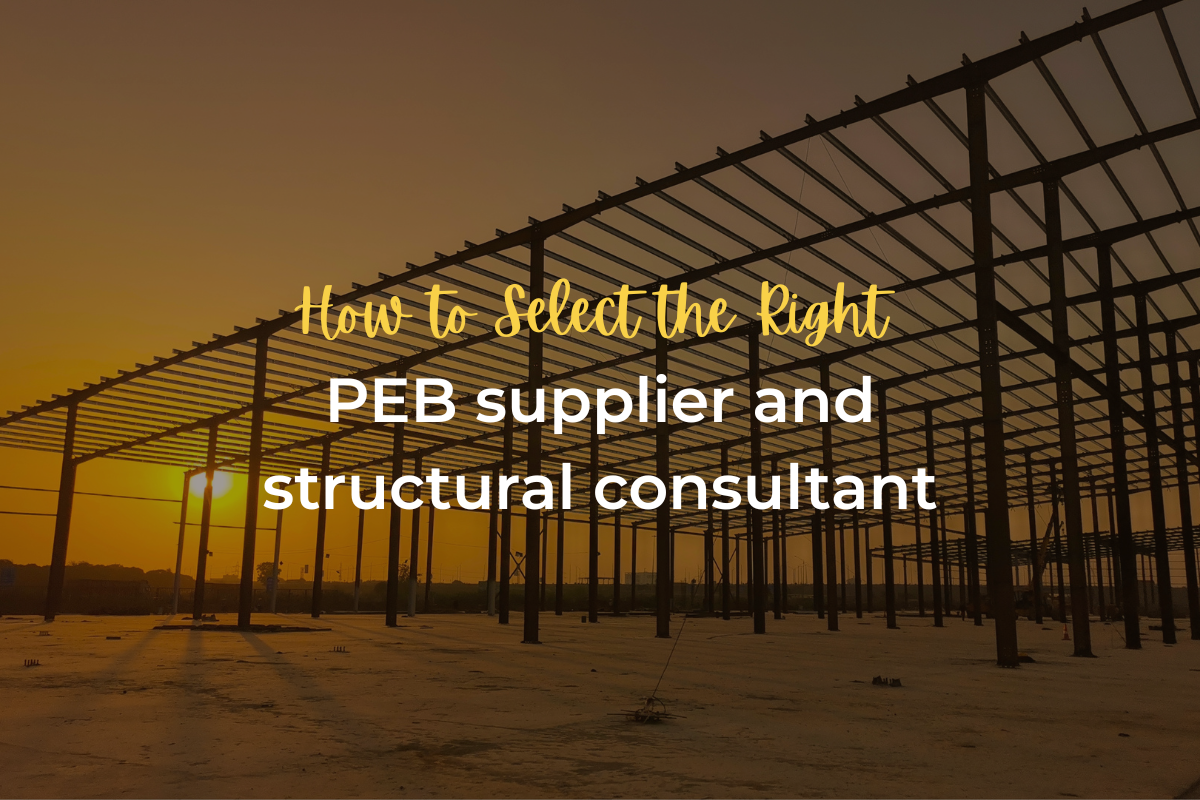
Choosing the right Pre Engineered Building (PEB) supplier and structural consultant is one of the most critical decisions in any industrial or commercial construction project. A well-designed and properly executed PEB system delivers speed, cost efficiency, durability, and long-term performance. However, selecting the wrong partner can lead to design errors, construction delays, cost overruns, and serious safety risks.
This guide explains the key factors you should evaluate to ensure you select a reliable PEB supplier and a competent structural consultant for your project.
1. Understand Your Project Requirements Clearly
Before approaching any PEB supplier or consultant, define your project requirements in detail. This includes:
- Building usage (warehouse, factory, logistics hub, oil & gas facility, etc.)
- Clear span and bay spacing
- Crane requirements (capacity, duty class, runway beam type)
- Design life and exposure conditions
- Applicable design codes (IS, AISC, MBMA, Eurocode)
- Project location and environmental loads (wind, seismic, corrosion)
A good PEB supplier will ask the right questions upfront, while an experienced structural consultant will help you refine these inputs instead of blindly accepting assumptions.
2. Evaluate Technical Expertise in Pre Engineered Building Design
Not all steel fabricators are true PEB specialists. A competent Pre Engineered Building supplier should have strong in-house engineering capabilities, including:
- Optimized tapered member design
- Load combinations and serviceability checks
- Connection design and detailing
- Crane load analysis
- Wind and seismic load calculations
Similarly, the structural consultant should demonstrate expertise in steel design, not just general RCC structures. Ask for sample calculation reports, design philosophies, and compliance with relevant standards.
3. Check Experience and Project Portfolio
Experience matters significantly in PEB projects. Review the supplier’s and consultant’s past projects and focus on:
- Similar building types and spans
- Projects in similar wind or seismic zones
- Industrial and heavy-load structures
- Export or international projects (if applicable)
A proven track record reduces risk and ensures smoother coordination between design, fabrication, and erection.
4. Assess Design Codes and Compliance
One of the most common mistakes in PEB projects is improper code application. Ensure the supplier and consultant clearly define:
- Which design codes are followed (IS 800, IS 875, IS 1893, AISC, etc.)
- Load assumptions and safety factors
- Deflection limits and serviceability criteria
- Corrosion protection systems
A reliable structural consultant will always prioritize safety, compliance, and transparency over aggressive weight reduction.
5. Coordination Between Supplier and Consultant
Poor coordination between the PEB supplier and structural consultant often leads to design clashes, RFIs, and site issues. Ideally:
- The PEB supplier should work closely with the structural consultant from concept stage
- Foundation reactions and anchor bolt details must be clearly coordinated
- Crane beams, mezzanines, and secondary structures should be integrated into a single design philosophy
This integrated approach saves time, avoids rework, and improves constructability.
6. Fabrication Quality and Quality Control Systems
The performance of a Pre Engineered Building depends heavily on fabrication quality. Evaluate the supplier’s:
- Fabrication facilities and machinery
- Welding standards and inspection procedures
- Quality assurance and quality control (QA/QC) processes
- Surface preparation and painting systems
Ask about material traceability, mill test certificates, and third-party inspections. Quality issues at the fabrication stage are difficult and costly to fix later.
7. Erection Support and Site Engineering
A good PEB supplier does not stop at fabrication. Check whether they provide:
- Erection drawings and method statements
- Site engineering support
- Bolt tightening procedures and alignment checks
- Safety guidelines during erection
Structural consultants should also be available to resolve site queries and design clarifications promptly.
8. Transparency in Commercials and Deliverables
Avoid suppliers who quote unrealistically low prices without clear scope definitions. Ensure the proposal clearly mentions:
- Design scope and exclusions
- Material grades and coating thickness
- Design responsibility matrix
- Delivery schedule and milestones
The right partner focuses on value engineering, not just cost cutting.
9. Long-Term Reliability and Support
A Pre Engineered Building is a long-term asset. Choose partners who offer:
- As-built drawings and final design documents
- Post-construction technical support
- Willingness to support future expansions or modifications
This is especially important for industrial clients planning phased development.
Why Choose Up N Above Steel Structures?
At Up N Above Steel Structures, we combine deep structural engineering expertise with practical PEB execution knowledge. Our team specializes in:
-
Optimized Pre Engineered Building design
-
Industrial, warehouse, and oil & gas structures
-
Indian and international code compliance
-
Clear calculations, constructible drawings, and responsive support
We believe in engineering-driven PEB solutions, not guesswork or copy-paste designs. If you’re looking for a reliable structural consultant and PEB engineering partner, Up N Above is ready to support your next project.